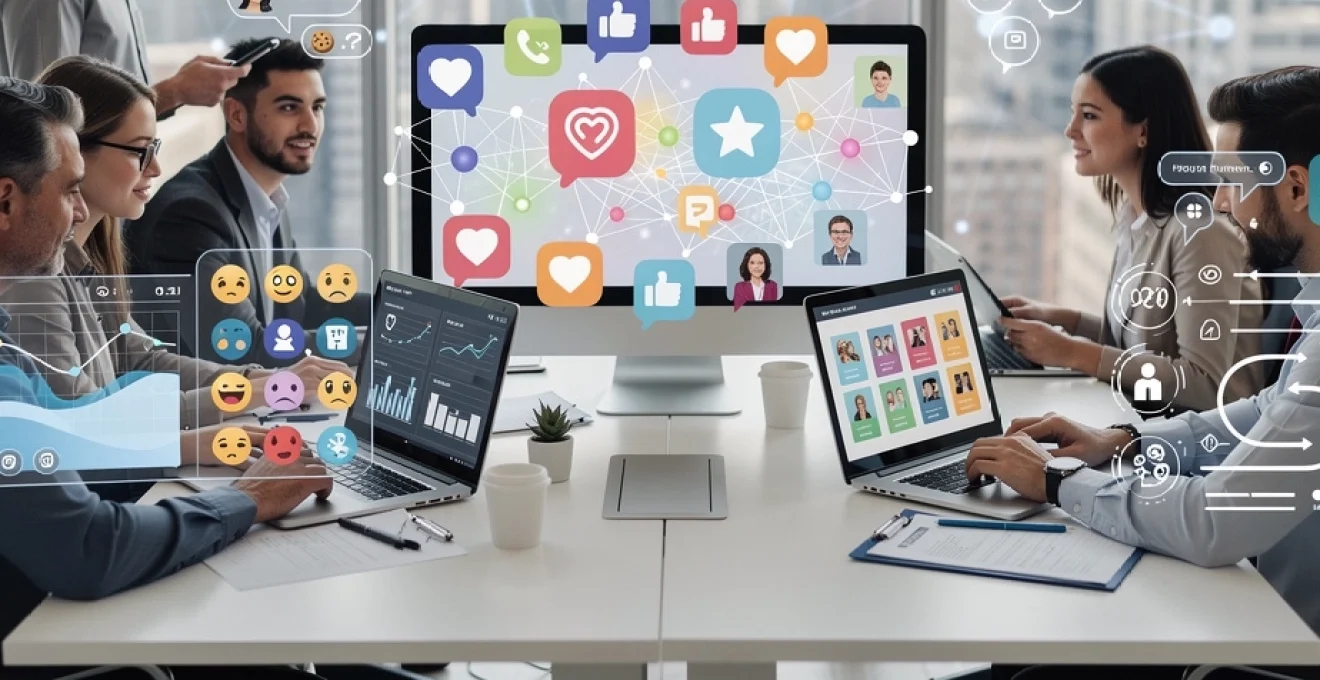
The digital revolution has fundamentally transformed how businesses communicate with their audiences. Marketing 2.0 represents a seismic shift from traditional one-way broadcasting to dynamic, participatory engagement models where customers are active collaborators rather than passive recipients. This transformation has redefined the very essence of customer relationships, turning monologues into conversations and converting consumers into brand advocates. As social media platforms, real-time analytics, and personalisation technologies have matured, businesses must now navigate an entirely new landscape where transparency, authenticity, and dialogue form the cornerstones of successful customer engagement.
Defining marketing 2.0: the paradigm shift from traditional to digital customer engagement
Marketing 2.0 represents a fundamental departure from the intrusive, interruptive nature of traditional marketing approaches. Where Marketing 1.0 relied on one-way shouting at customers through television commercials, print advertisements, and direct mail campaigns, Marketing 2.0 embraces conversations, collaboration, and community-driven word-of-mouth. This evolution isn’t merely about adopting new technologies; it’s about fundamentally rethinking how you approach customer relationships.
The distinction between these two paradigms is stark. Traditional marketing operated on a broadcast model where brands controlled the message, the timing, and the channels. Consumers had limited ability to respond, critique, or share their experiences beyond their immediate social circles. Marketing 2.0, by contrast, empowers customers with unprecedented influence over brand narratives. A single tweet can reach millions, a product review can make or break a launch, and online communities can collectively shape product development.
According to recent research, approximately 80% of consumers are more likely to purchase from brands offering tailored experiences. This statistic underscores a critical reality: personalisation and customer-centricity have become non-negotiable elements of contemporary marketing strategy. Yet many organisations still struggle to grasp what Marketing 2.0 truly entails. For some businesses, adopting Marketing 2.0 means little more than creating Twitter accounts, Facebook profiles, and LinkedIn pages—a superficial approach that misses the deeper transformation required.
Marketing 2.0 is characterised by conversations, collaboration, communities, and word of mouth, fundamentally transforming how businesses engage with their audiences in digitally connected environments.
The objective must be clear from the outset. Are you facilitating inbound marketing? Will your social media presence generate qualified leads? Does your content strategy ensure wider reach through appropriate hashtags and following the right influencers? These questions demand thoughtful answers before implementing any Marketing 2.0 strategy. Without clear objectives, businesses risk accumulating vanity metrics—200,000 Facebook likes that do little to generate revenue or acquire meaningful customer relationships.
Evolution from web 1.0 to marketing 2.0: social media platforms and User-Generated content
The journey from Web 1.0 to Marketing 2.0 represents one of the most significant transformations in commercial history. Understanding this evolution helps contextualise why customer interactions have changed so dramatically and why businesses must continually adapt their engagement strategies.
The transition from static websites to interactive digital ecosystems
Web 1.0 was characterised by static, read-only websites where information flowed in one direction. Businesses published content, and visitors consumed it passively. Interaction was minimal, limited perhaps to email inquiries or basic contact forms. This model mirrored traditional marketing’s broadcast approach, simply transferring it to a digital medium without leveraging the internet’s inherent interactive potential.
The emergence of Web 2.0 technologies changed everything. Dynamic content, user authentication systems, and collaborative platforms transformed websites from digital brochures into interactive ecosystems. Suddenly, visitors could comment, share, rate, and contribute their own content. This technological shift enabled the community-driven features that define Marketing 2.0: forums, review sections, social sharing buttons, and user-generated content platforms.
Facebook, twitter, and LinkedIn as primary marketing 2.0 channels
Social media platforms became the primary battleground for Marketing 2.0 initiatives. Facebook, launched in 2004, demonstrated how digital networks could facilitate personal connections at unprecedented scale
and quickly evolved into a powerful marketing channel. Twitter (now X) introduced real-time, short-form updates that allowed brands to participate in live conversations, trending topics, and customer support exchanges. LinkedIn, meanwhile, became the go-to platform for B2B marketing 2.0 strategies, enabling targeted outreach, thought leadership, and professional community building. Together, these platforms shifted the focus from polished, one-way brand messages to ongoing dialogues where customers could respond, share, and shape the narrative in public view.
In a Marketing 2.0 context, these social networks are not just distribution channels; they are engagement environments. Brands listen as much as they speak, using comments, reactions, and direct messages as real-time signals of sentiment and intent. Effective use of Facebook groups, Twitter threads, and LinkedIn communities enables organisations to nurture micro-communities around niche interests, industries, or problems. The outcome is a richer, more continuous customer relationship that extends far beyond a single campaign or transaction.
Consumer-created content and peer-to-peer recommendation systems
One of the defining characteristics of Marketing 2.0 is the rise of consumer-created content as a core driver of trust and discovery. User reviews, social posts, unboxing videos, and “how-to” tutorials made by customers now influence purchasing decisions more than many brand-owned assets. According to multiple studies, over 80% of consumers say they trust recommendations from peers or user-generated content more than traditional advertising. This shift has turned every customer into a potential publisher and every interaction into content.
Peer-to-peer recommendation systems, such as ratings, reviews, and referral programs, formalise this behaviour. E-commerce platforms, app stores, and marketplace sites use star ratings, testimonials, and “customers also bought” sections to surface social proof at key decision points. Instead of asking “How loud can we shout?”, Marketing 2.0 asks, “How can we empower satisfied customers to speak for us?” When brands encourage authentic reviews, repost customer content, and reward referrals, they tap into network effects that amplify reach organically and cost-effectively.
RSS feeds, blogs, and collaborative filtering technologies
Before social media dominated attention, blogs and RSS feeds laid much of the groundwork for Marketing 2.0. Blogs gave brands and individuals a platform to publish regularly, build authority, and interact via comments. RSS feeds allowed users to subscribe to content streams and consume updates on their own terms, a clear departure from the interruptive model of forced exposure. This subscription-based relationship created the foundation for inbound marketing, where value-led content attracts prospects instead of chasing them.
In parallel, collaborative filtering technologies emerged to make sense of growing content and product inventories. Recommendation engines that suggested “people who liked this also liked…” introduced a new era of personalised discovery. These systems, still central to many Marketing 2.0 frameworks, draw on patterns of user behaviour to surface relevant items without explicit search. For marketers, this meant that relevance could be scaled, and content could be delivered in a way that felt more like a helpful guide than a hard sell—much like a salesperson who remembers your preferences and suggests options that genuinely fit.
Bidirectional communication models: how marketing 2.0 transforms customer dialogue
If Marketing 1.0 was about speaking at customers, Marketing 2.0 is about speaking with them. Bidirectional communication models turn campaigns into conversations and feedback into fuel for continuous improvement. Instead of waiting months for market research results, businesses can now observe, respond, and iterate in near real time based on what customers say and do online.
Real-time customer feedback loops through social listening tools
Social listening tools enable brands to monitor mentions, keywords, and hashtags across social platforms and the broader web. Rather than relying solely on surveys or focus groups, companies can now access an always-on stream of unsolicited, authentic feedback. This real-time insight allows marketers to identify emerging trends, detect potential crises early, and understand how customers actually talk about their needs and pain points.
By integrating social listening into a broader customer engagement strategy, businesses create feedback loops that inform product development, service improvements, and content creation. For example, repeated complaints about a confusing onboarding process can trigger a redesign, while recurring praise for a specific feature can inspire focused campaigns. When you respond visibly to this feedback—acknowledging issues, thanking advocates, and sharing updates—you signal that the conversation is genuine, not performative.
Community-driven brand co-creation and crowdsourcing initiatives
Marketing 2.0 also enables brands to involve customers directly in shaping products, services, and campaigns. Community-driven co-creation initiatives—such as idea contests, beta programs, and open innovation platforms—transform customers from passive buyers into active collaborators. This approach mirrors a design workshop where users sit at the table with your team, helping to decide what gets built next.
Crowdsourcing can take many forms: asking your community to vote on new flavours, inviting power users to suggest feature enhancements, or sourcing creative assets like slogans and visuals from fans. Beyond generating fresh ideas, co-creation deepens emotional investment. When customers see their input reflected in the final offer, they feel a sense of ownership and are more likely to become long-term advocates. The key is to close the loop: show participants how their contributions shaped decisions and acknowledge them publicly when possible.
Conversational marketing via chatbots and messenger applications
Another key aspect of Marketing 2.0 is conversational marketing—using chat interfaces to engage customers in real-time, personalised dialogues. Chatbots on websites, WhatsApp, Messenger, and other apps can qualify leads, answer common questions, and guide users along the customer journey 24/7. When designed well, these experiences feel like speaking with a helpful assistant rather than filling out a static form.
Conversational interfaces shorten the distance between interest and action. For example, a prospect browsing a pricing page might receive a prompt from a chatbot offering a quick cost estimate or a link to schedule a demo. Over time, machine learning models can optimise these flows based on previous interactions, improving both speed and relevance. Think of it as having a scalable, always-available sales and support team that continuously learns from every conversation.
Review platforms: TripAdvisor, yelp, and trustpilot as dialogue catalysts
Review platforms such as TripAdvisor, Yelp, and Trustpilot turn customer experiences into public, searchable records. In a Marketing 2.0 environment, these reviews are not simply static testimonials; they are active dialogue spaces. Potential customers read them to form expectations, while brands and existing customers respond, clarify, and add context. A thoughtful reply to a negative review can sometimes be more persuasive than dozens of generic positive comments.
Managing your presence on these platforms is now a core part of digital customer engagement. Responding promptly, professionally, and empathetically to reviews—both positive and negative—demonstrates that you value feedback and are committed to continuous improvement. It also allows you to correct misunderstandings, highlight policies, and show prospective buyers how you handle issues when they arise. In many ways, review sites function as public customer service counters, where the quality of your response is as important as the original experience.
Personalisation algorithms and behavioural targeting in marketing 2.0 frameworks
Personalisation is the engine that powers many Marketing 2.0 experiences. Instead of delivering the same generic message to everyone, modern marketing frameworks tailor content, offers, and timing based on individual behaviour and preferences. This shift from broad segments to “markets of one” is made possible by data and algorithms that interpret digital footprints at scale.
Cookie-based tracking and customer journey mapping technologies
Cookie-based tracking has long been a cornerstone of behavioural targeting, allowing marketers to understand how users move across websites and campaigns. By collecting data on pages visited, time spent, and actions taken, brands can infer interests, intent levels, and potential friction points. Customer journey mapping tools then visualise these paths, highlighting where users drop off, what content they engage with, and which touchpoints drive conversions.
In practice, this means you can tailor retargeting ads, email sequences, and on-site messages to reflect where someone is in their journey. A visitor who abandoned a cart might see a reminder or a limited-time incentive, while a first-time blog reader could be invited to download a relevant guide. As privacy regulations evolve and third-party cookies decline, marketers are increasingly shifting towards first-party data and consent-based tracking—but the underlying goal remains the same: provide context-aware, helpful experiences instead of one-size-fits-all messaging.
Amazon’s recommendation engine and netflix’s content personalisation
Few examples illustrate Marketing 2.0 personalisation better than Amazon and Netflix. Amazon’s recommendation engine analyses browsing history, past purchases, and behaviour from similar users to suggest products you are likely to want next. This transforms the shopping experience from a simple search-and-buy process into an ongoing discovery journey, often surfacing needs you did not know you had.
Netflix operates similarly in the content domain, using viewing history, completion rates, and interaction patterns to recommend shows and films. Beyond suggesting titles, it even tests different artwork and descriptions to see which combinations resonate with different audience segments. These platforms show how personalisation can become a core part of the product itself, not just an add-on marketing tactic. The lesson for other businesses is clear: the more your offer feels curated to each user, the deeper the engagement and the higher the lifetime value.
Segmentation strategies using CRM systems and marketing automation platforms
Customer Relationship Management (CRM) systems and marketing automation platforms enable more structured personalisation by segmenting audiences and orchestrating tailored campaigns. Instead of blasting a single newsletter to your entire database, you can create segments based on demographics, behaviour, purchase history, or engagement level. Each segment then receives messages and offers that reflect its specific needs and stage in the customer lifecycle.
For example, new subscribers might enter a welcome sequence that introduces your brand story and core benefits, while long-term customers receive loyalty rewards or early access to new releases. Automation tools can trigger messages based on events—such as form submissions, webinar attendance, or inactivity—keeping your communication timely and relevant without requiring constant manual effort. When implemented thoughtfully, this kind of segmented, automated engagement feels less like marketing and more like an ongoing, helpful relationship.
Dynamic content delivery and A/B testing methodologies
Dynamic content delivery takes personalisation one step further by adjusting what users see in real time based on their profiles and actions. Website sections, email blocks, and in-app messages can all be swapped out to reflect different segments or behaviours. For instance, a returning visitor may see different homepage content from a first-time visitor, or a known enterprise lead might see case studies tailored to their industry.
A/B testing underpins this optimisation process by comparing different versions of content, layouts, or calls-to-action to see which performs better. Rather than relying on assumptions, marketers use data from controlled experiments to refine their messaging and design. Over time, this iterative approach compounds improvements, much like regularly tuning an engine to improve performance. By combining dynamic content and A/B testing, you systematically move towards experiences that resonate more deeply with your audience and drive measurable outcomes.
Viral marketing mechanics: network effects and social sharing amplification
Viral marketing in the Marketing 2.0 era leverages social networks and sharing behaviours to achieve exponential reach with relatively modest initial investment. Instead of buying every impression, brands design content and campaigns that encourage users to forward, repost, or remix them. When done well, each new viewer becomes a potential distributor, creating a cascading effect that can dramatically extend visibility.
The mechanics behind this rely on both psychology and technology. On the psychological side, highly shareable content often taps into emotion—humour, surprise, awe, or even outrage—and aligns with how people want to be perceived by their peers. On the technological side, share buttons, referral links, and platform-specific features like duets or stitches make it frictionless to spread content across networks. From a strategic standpoint, you can think of viral marketing as planting “seeds” in connected communities and giving them a compelling reason to grow on their own.
Metrics and analytics: measuring customer engagement in marketing 2.0 environments
In a Marketing 2.0 context, intuition alone is no longer sufficient. Because interactions are trackable and campaigns are iterative, robust analytics become essential to understanding what works, what doesn’t, and why. Measuring engagement across channels allows you to refine your strategies, allocate budget more intelligently, and prove the impact of marketing on business outcomes.
Key performance indicators: engagement rate, social reach, and conversion tracking
Key Performance Indicators (KPIs) in Marketing 2.0 go beyond simple impressions or click-through rates. Engagement metrics such as likes, comments, shares, time on page, and repeat visits offer a richer view of how deeply your audience interacts with your content. Social reach and impressions indicate how far your messages travel, while conversion tracking links these interactions to concrete actions like sign-ups, purchases, or demo requests.
Defining the right KPIs starts with clarifying your objectives. Are you aiming to build brand awareness, generate qualified leads, drive e-commerce sales, or improve customer retention? Each goal requires a different set of metrics and benchmarks. By setting clear targets and monitoring them consistently, you can avoid getting distracted by vanity metrics and instead focus on the indicators that correlate with long-term value.
Google analytics, HubSpot, and hootsuite for customer interaction analysis
Analytics tools such as Google Analytics, HubSpot, and Hootsuite give marketers a comprehensive view of customer interactions across owned and earned channels. Google Analytics helps you understand website behaviour—traffic sources, user flows, content performance, and conversion funnels—so you can identify which touchpoints drive meaningful actions. HubSpot goes further by integrating CRM data, email performance, and automation workflows, connecting marketing engagement directly to pipeline and revenue.
Hootsuite and similar social media management platforms centralise publishing, monitoring, and reporting across multiple networks. They allow you to track engagement by post, campaign, and channel, making it easier to spot patterns and optimise your content calendar. Used together, these tools provide a multi-dimensional picture of your Marketing 2.0 efforts, from the first social click to the final sale and beyond.
Sentiment analysis tools and brand mention monitoring systems
Beyond quantitative metrics, Marketing 2.0 also requires understanding the tone of conversations. Sentiment analysis tools and brand mention monitoring systems assess whether online discussions about your brand, products, or industry are positive, negative, or neutral. By analysing language patterns in reviews, social posts, and forums, these tools surface insights that might be difficult to catch manually—especially at scale.
For example, a sudden spike in negative sentiment might signal a product issue, a PR crisis, or a competitor’s move that needs immediate attention. Conversely, rising positive sentiment around a feature or campaign can guide you to double down on what resonates. Monitoring brand mentions also helps you identify influential advocates, uncover user-generated content worth amplifying, and join relevant conversations in a timely way. In essence, sentiment and mention analysis function like a digital “early warning system” and a continuous listening channel, both crucial for agile, customer-centric marketing in a fast-moving digital landscape.