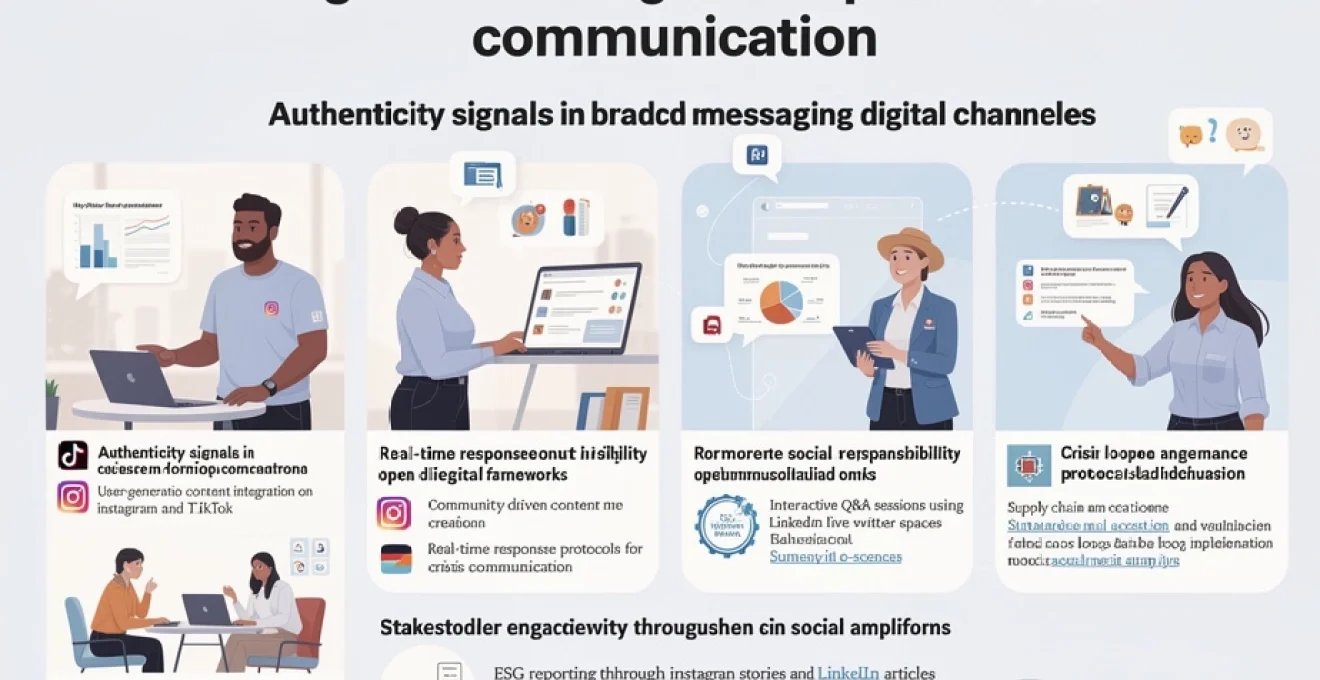
In an era where consumers possess unprecedented access to information and platforms for voicing their opinions, transparent social communication has evolved from a competitive advantage into an absolute necessity for organisations seeking to build and maintain trust. The digital landscape has fundamentally altered the relationship between brands and their audiences, creating an environment where authenticity, openness, and accountability are not merely appreciated but demanded. Research indicates that 86% of consumers consider transparency a key factor when deciding which brands to support, whilst 94% are likely to demonstrate loyalty to organisations that practice complete transparency. These statistics underscore a fundamental shift in audience expectations, where traditional marketing messages no longer suffice and where genuine, honest dialogue has become the currency of credibility.
The contemporary social media ecosystem presents both opportunities and challenges for organisations committed to transparent communication. Platforms such as Instagram, TikTok, LinkedIn, and Twitter have democratised brand conversations, allowing stakeholders to scrutinise corporate claims, challenge inconsistencies, and celebrate authenticity in real-time. This new reality requires organisations to rethink their communication strategies fundamentally, moving beyond carefully curated messaging towards more open, responsive, and human-centred approaches. The organisations that thrive in this environment are those that recognise transparency not as a risk to be managed but as a foundation upon which lasting relationships are built.
Authenticity signals in brand messaging across digital channels
Authenticity has become the cornerstone of effective social communication, yet it remains one of the most challenging qualities for organisations to demonstrate consistently. Audiences have developed sophisticated filters for detecting inauthentic messaging, having been exposed to decades of polished advertising and carefully managed corporate communications. Today’s consumers can distinguish between genuine transparency and what has been termed « transparency theatre »—superficial gestures towards openness that lack substantive commitment. The key to authentic communication lies in consistency across all touchpoints, alignment between stated values and actual practices, and a willingness to acknowledge imperfections rather than projecting an impossibly flawless image.
User-generated content integration on instagram and TikTok
User-generated content (UGC) represents one of the most powerful tools for building trust through social communication. When organisations showcase authentic content created by actual customers rather than relying exclusively on professionally produced materials, they signal confidence in their products and respect for their community’s voices. On Instagram, brands that regularly feature customer photographs, testimonials, and reviews in their feeds and Stories demonstrate genuine appreciation for their audience whilst providing social proof that resonates more deeply than traditional advertising. TikTok’s algorithm particularly rewards authentic, unpolished content, making it an ideal platform for UGC strategies that emphasise real experiences over manufactured perfection.
The integration of UGC requires more than simply reposting customer content; it demands a systematic approach to obtaining permissions, crediting creators appropriately, and curating content that accurately represents diverse customer experiences. Organisations should establish clear guidelines for UGC campaigns, including hashtag strategies that make discovery easier and recognition programmes that incentivise participation whilst maintaining authenticity. Importantly, effective UGC strategies include both positive and constructive feedback, demonstrating that the organisation values honest dialogue over selective presentation of only favourable opinions.
Real-time response protocols for crisis communication
The speed at which information spreads across social platforms means that delayed or inadequate responses to crises can irreparably damage organisational reputation. Transparent crisis communication requires pre-established protocols that enable rapid assessment, decision-making, and public response when issues emerge. These protocols should clearly define roles and responsibilities, establish approval processes that balance thoroughness with urgency, and create messaging frameworks that prioritise honesty and accountability over defensive posturing. Research shows that organisations responding to crises within the first hour are significantly more likely to maintain stakeholder trust compared to those that delay their initial response beyond 24 hours.
Effective real-time response extends beyond simply addressing the immediate issue; it includes providing regular updates as situations evolve, acknowledging uncertainty when complete information is unavailable, and demonstrating concrete actions being taken to resolve problems and prevent recurrence. The most trusted organisations during crises are those that resist the temptation to minimise problems or shift blame, instead accepting responsibility where appropriate and communicating clearly about remediation efforts. This approach transforms potential trust-destroying moments into trust-building opportunities that demonstrate organisational character and commitment to stakeholder wellbeing.
Behind-
Behind-the-scenes content strategy for humanising corporate identity
Behind-the-scenes content offers a powerful counterbalance to polished campaigns by revealing the people, processes, and decision-making that sit behind a brand’s public image. Rather than focusing solely on finished products or high-level announcements, organisations can use Instagram Reels, TikTok videos, and LinkedIn photo diaries to showcase everyday moments: team collaborations, prototype testing, campaign planning, or even mistakes that led to improvements. This kind of transparent social communication helps audiences see the organisation as a collection of real people rather than an abstract corporate logo.
A strategic approach is essential to ensure behind-the-scenes content supports, rather than undermines, brand trust. Organisations should define clear boundaries around what can be shared, obtain consent from featured employees, and ensure that safety, privacy, and compliance standards are respected. At the same time, content should not be so sanitised that it feels staged; minor imperfections, candid conversations, and unscripted reactions often function as authenticity signals that resonate more deeply than carefully rehearsed messages. When executed well, behind-the-scenes storytelling becomes an ongoing narrative thread that reinforces organisational values and culture across digital channels.
Transparent data usage policies in social media analytics
As organisations increasingly rely on social media analytics to understand and engage their audiences, transparent communication about data usage has become a central trust factor. Stakeholders are no longer satisfied with generic privacy statements; they expect clear explanations of what data is collected, how it is processed, and for what specific purposes it is used. This is especially true in regions governed by strict data protection laws, where demonstrating compliance is not only a legal obligation but also a reputational necessity. Transparent data usage policies on social channels can reduce anxiety, prevent misconceptions, and position the organisation as a responsible steward of personal information.
Practically, this means using accessible language in social posts, Stories, and link-in-bio pages to explain analytics practices without resorting to dense legal jargon. Organisations can, for example, create short explainer videos about cookie usage, audience segmentation, and third-party tools, or pin posts that summarise key points from longer privacy policies. A helpful analogy is to think of data transparency like a restaurant kitchen with a glass wall: you do not need to reveal recipes in full, but you should allow diners to see how food is prepared and handled. By proactively addressing questions such as « How do you use my engagement data? » or « Who else can access my information? », brands can transform a potential area of suspicion into a source of confidence.
Stakeholder engagement through open dialogue frameworks
Trust is rarely built through one-way broadcasting; it emerges from structured, ongoing dialogue where stakeholders feel both heard and empowered. Open dialogue frameworks provide the scaffolding for such engagement, combining clear engagement rules, predictable formats, and transparent follow-up processes. Whether the stakeholders are customers, investors, employees, or community members, social platforms can serve as public forums where expectations are clarified, concerns are addressed, and shared solutions are co-created. When organisations adopt transparent social communication practices that prioritise listening as much as speaking, their digital channels evolve from noticeboards into collaborative spaces.
Developing these frameworks requires more than scheduling occasional polls or Q&A sessions. It involves defining which topics are open for discussion, how contributions will be evaluated, and how outcomes will be communicated back to participants. Without this clarity, even well-intentioned engagement can lead to frustration if stakeholders perceive that their input disappears into a void. By contrast, when stakeholders consistently see their feedback referenced in decisions, content, or product updates, they build a deep sense of participation and shared ownership.
Community-driven content co-creation models
Community-driven content co-creation goes beyond inviting comments or likes; it involves actively collaborating with stakeholders to shape narratives, campaigns, and even products. This might include inviting customers to share use cases, hosting design challenges, or creating ambassador programmes that give selected community members a direct role in content production. These models leverage the creativity and lived experience of the audience, resulting in stories that feel more relatable and less manufactured. They also send a clear signal that the organisation does not view its community merely as a target market, but as a genuine partner.
To make co-creation work at scale, organisations should establish transparent criteria for participation, clear timelines, and explicit expectations around intellectual property and recognition. For instance, stating upfront how submissions will be selected, how contributors will be credited, and whether any form of compensation is offered helps prevent misunderstandings later. Think of co-creation as co-authoring a book: everyone involved needs to know the theme, the editorial standards, and how their contribution fits into the final story. When these elements are managed openly, community-driven initiatives can significantly deepen engagement and trust.
Interactive Q&A sessions using LinkedIn live and twitter spaces
Interactive Q&A sessions provide a real-time arena for transparent social communication, allowing stakeholders to ask direct questions and receive immediate, unfiltered responses from organisational leaders. Platforms such as LinkedIn Live and Twitter Spaces are particularly effective for this format because they support live interaction, audience questions, and replay functionality. Leaders can use these sessions to clarify strategic decisions, discuss upcoming changes, or respond to emerging issues, thereby reducing speculation and closing information gaps. When handled well, these forums become regular touchpoints that reinforce the organisation’s commitment to openness.
However, live formats also introduce risk: difficult questions cannot be easily avoided, and missteps are often amplified. Preparation is therefore essential. Organisations should develop topic guides, agree on boundaries around confidential information, and assign moderation roles to manage the flow of questions respectfully and fairly. One practical approach is to combine pre-submitted questions with live queries, ensuring that key concerns are addressed while still leaving room for spontaneous dialogue. By acknowledging challenging questions instead of sidestepping them, leaders can demonstrate confidence and authenticity, even when the answers are not yet final.
Public comment moderation standards and visibility
Comment sections on social platforms are often where trust is either reinforced or eroded in public view. Transparent moderation standards help set expectations about what is acceptable, how decisions are made, and why certain comments may be removed or hidden. Instead of quietly deleting content, organisations can publish clear community guidelines and link to them in bios, pinned posts, or profile descriptions. These guidelines should outline how the brand handles harassment, misinformation, off-topic promotion, and legitimate criticism, emphasising a commitment to respectful, constructive dialogue.
Visibility is crucial: when users see that both praise and criticism remain visible (within reasonable bounds), they are more likely to perceive the comment space as fair. Consider moderation guidelines as the rules of a town hall meeting; everyone is free to speak, but not to shout others down or spread harmful falsehoods. Where comments do need to be limited—for instance, in cases of hate speech or personal attacks—moderators should, where possible, provide short, standardised explanations. This level of openness transforms moderation from a mysterious black box into a predictable process that supports, rather than suppresses, meaningful conversation.
Feedback loop implementation in product development cycles
Feedback is only as valuable as the action that follows. Implementing visible feedback loops in product development cycles demonstrates that stakeholder input is not merely collected for show, but actively shapes outcomes. Social channels provide rich streams of qualitative data—from feature requests and bug reports to suggestions for new services—that can be systematically tagged, prioritised, and routed to relevant teams. When patterns emerge, organisations can share how this collective input has influenced roadmaps, pilot programmes, or policy changes, closing the loop in a way that reinforces trust.
One effective technique is the « you asked, we did » format, where brands periodically publish posts mapping specific community suggestions to concrete updates. Another is to invite users into beta testing groups or advisory panels, offering them early access in exchange for structured feedback. You might ask: does this level of transparency risk exposing unfinished ideas or imperfect products? In practice, involving stakeholders early often increases goodwill, because audiences understand that innovation is iterative. Presenting the development process like a shared journey rather than a hidden laboratory helps stakeholders feel invested in both successes and setbacks.
Corporate social responsibility disclosure on social platforms
Corporate social responsibility (CSR) activities have moved from annual PDF reports into the dynamic, always-on environment of social media. Stakeholders expect to see how organisations contribute to environmental, social, and governance (ESG) outcomes in real time, not just as retrospective summaries. Transparent CSR disclosure across platforms builds credibility by aligning stated values with observable actions, while also inviting scrutiny and dialogue. When organisations use social channels to share progress, setbacks, and lessons learned, they transform CSR from a promotional exercise into a visible, accountable practice.
At the same time, audiences are increasingly adept at distinguishing between meaningful disclosure and « greenwashing » or « purpose-washing. » This makes specificity essential: rather than vague claims about being « sustainable » or « community-focused, » organisations must share measurable goals, timelines, and outcomes. Social media’s visual and interactive features make it an ideal venue for such detail, allowing complex ESG information to be broken down into accessible formats that stakeholders can question, share, and track over time.
ESG reporting through instagram stories and LinkedIn articles
Instagram Stories and LinkedIn Articles offer complementary formats for ESG reporting that combine accessibility with depth. Instagram Stories, with their ephemeral and visual nature, are well-suited to quick updates: snapshots from volunteering days, short videos from renewable energy sites, or infographics highlighting monthly carbon reductions. These bite-sized pieces of information keep CSR efforts visible in day-to-day social feeds and provide a narrative of ongoing action. Features like highlights allow key ESG themes to be archived for longer-term reference, effectively creating a public, visual CSR dossier.
LinkedIn Articles, by contrast, enable more detailed exploration of ESG strategies, methodologies, and outcomes. Organisations can publish case studies, interviews with sustainability officers, or breakdowns of ESG metrics and frameworks. An analogy here is to think of Instagram as the « front window » of your CSR activities and LinkedIn as the « reference library. » Used together, they allow stakeholders to scan for quick updates and then dive deeper into topics of interest. By cross-linking Stories and Articles, organisations create a cohesive, multi-layered ESG narrative that feels both transparent and robust.
Supply chain transparency communication via facebook and YouTube
Supply chain transparency has become a defining issue for trust, especially in sectors like fashion, food, and technology. Consumers increasingly want to know not only where products are made, but under what conditions and with what environmental impact. Facebook and YouTube provide powerful platforms for storytelling around these questions, enabling organisations to use video tours, interviews, and documentaries to trace the journey from raw material to finished product. Such content can demystify complex global supply chains and give visibility to partners, workers, and communities who are often invisible in traditional marketing.
To avoid oversimplification, organisations should be candid about challenges as well as achievements. For example, a YouTube mini-series might follow efforts to improve labour standards in a specific region, including obstacles encountered and next steps planned. On Facebook, carousel posts can break down the stages of production, linking to more detailed resources for those who want to explore further. When audiences see that an organisation is willing to discuss imperfect realities rather than only showcasing best-case scenarios, they are more likely to view its transparency as genuine rather than cosmetic.
Sustainability metrics visualisation for audience accessibility
Many sustainability indicators—such as Scope 3 emissions, water intensity, or circularity ratios—are technically complex and difficult for general audiences to interpret. Visualisation plays a crucial role in making these metrics accessible and meaningful. Social platforms offer rich tools for this purpose: infographics, animated charts, and short explainer videos can translate dense reports into digestible updates. For instance, an organisation might use a simple visual to show year-on-year reductions in energy use, or an animated sequence to explain how waste is diverted from landfill.
The key is to balance simplicity with accuracy. Overly simplified visuals risk misrepresenting progress, while overly complex ones can discourage engagement. Asking, « If someone had just 15 seconds, what would we want them to understand about this metric? » can help sharpen the message. Organisations can further enhance understanding by relating metrics to familiar analogies—such as equating emission savings to car journeys avoided or trees planted—while always linking back to detailed methodology for those who want to verify the figures. This layered approach respects both casual viewers and expert stakeholders, reinforcing transparency at multiple levels.
Third-party verification badges and certifications display
Third-party verification provides an external check on CSR and ESG claims, offering stakeholders additional assurance that reported progress is credible. Certifications such as B Corp, Fairtrade, ISO standards, or recognised environmental labels function as trust anchors when displayed responsibly across social profiles. Including these badges in profile images, bio sections, or post graphics signals that the organisation’s practices have been assessed against established benchmarks. However, transparency requires that such symbols be accompanied by clear explanations of what they cover—and what they do not.
Rather than simply showcasing a logo, organisations can create posts or Stories that unpack the certification process, renewal requirements, and any limitations or exclusions. For example, clarifying whether a certification applies to the entire company or only certain product lines helps prevent misinterpretation. Stakeholders should also be able to find links to official registries or verification pages to confirm the status of certifications. By treating third-party badges not as marketing trophies, but as starting points for informed discussion, organisations use them to deepen, rather than superficially decorate, their transparent social communication.
Crisis management protocols for transparent communication
Crisis situations—whether product recalls, data breaches, ethical controversies, or operational failures—are critical tests of an organisation’s commitment to transparent communication. In these moments, stakeholders look not only at what went wrong, but at how the organisation responds: how quickly it communicates, how clearly it accepts responsibility, and how concretely it outlines remedies. Research consistently shows that honest, timely disclosure during crises mitigates reputational damage and can even strengthen trust in the long term. Conversely, attempts to conceal, minimise, or deflect often inflict more harm than the original incident.
Effective crisis management protocols therefore place transparency at their core. This includes pre-defined escalation paths, prepared holding statements that prioritise empathy and factual clarity, and decision matrices for when and how to issue updates across different channels. Social media teams should be integrated into crisis planning rather than being informed at the last minute; after all, platforms like Twitter, TikTok, and Facebook are often where crises first surface. Organisations should also rehearse crisis scenarios through simulations, ensuring that spokespeople are comfortable acknowledging uncertainty, correcting mistakes, and explaining the basis for decisions under pressure.
Another important element is the post-crisis learning phase. Transparent organisations publicly share not only what happened and how it was fixed, but also what has changed to prevent recurrence. This might include publishing summaries of internal investigations, announcing policy updates, or inviting external experts to review new safeguards. You might wonder: does revealing internal weaknesses risk undermining confidence? In reality, when communication is thoughtful and accountable, stakeholders typically view such openness as evidence of maturity and integrity. In this way, crisis management becomes not just damage control, but an opportunity for demonstrable growth and renewed trust.
Employee advocacy programmes as trust amplifiers
Employees are often the most credible voices an organisation has; surveys repeatedly show that people trust « a person like me » more than abstract brand channels or corporate executives alone. Employee advocacy programmes harness this trust by equipping staff to share authentic, organisation-related content through their own networks. When employees talk openly about their work, culture, and values, they provide a human lens on the brand that external audiences find compelling. Importantly, effective programmes do not script employees, but support them with resources, guidelines, and training to communicate in ways that feel natural and honest.
Designing such programmes requires a balance between empowerment and responsibility. Organisations should establish clear social media policies that outline confidentiality boundaries, disclose expectations around representing the company, and provide guidance on handling sensitive topics. At the same time, they should encourage employees to use their own voice, experiences, and perspectives rather than copying corporate messages verbatim. Think of employee advocates as trusted storytellers rather than brand megaphones; their role is to share how organisational values play out in real life, whether that involves describing workplace flexibility, sustainability initiatives, or customer success stories.
To sustain momentum, advocacy programmes benefit from recognition mechanisms and feedback channels. Highlighting employee posts on official brand accounts, providing content prompts or briefing packs, and offering optional training in digital literacy and crisis awareness helps maintain engagement. Organisations can also use internal surveys to understand employees’ comfort levels with public communication and adapt support accordingly. When staff feel that their voices are valued, not coerced, advocacy becomes an organic extension of a healthy internal culture—and audiences on the outside can sense the difference.
Measuring trust metrics through social listening and sentiment analysis
Transparency is not only about what organisations say, but also about how they measure and respond to what stakeholders think and feel. Social listening and sentiment analysis tools enable brands to monitor conversations across platforms, identify emerging concerns, and evaluate whether their transparent communication strategies are actually building trust. Instead of relying solely on vanity metrics such as follower counts or impressions, organisations can track indicators like sentiment trends, topic associations, share of voice in key debates, and the prevalence of trust-related language in user comments.
However, quantitative dashboards tell only part of the story. To gain a nuanced understanding, organisations should combine automated sentiment scores with qualitative review of representative posts and threads. For example, a slight drop in positive sentiment might prompt closer reading of comments to determine whether there is growing scepticism around a specific claim or initiative. Regularly synthesising these insights into internal reports—and sharing them transparently with relevant teams—helps ensure that communication strategies remain responsive. Asking « What are stakeholders telling us that we might not want to hear? » can be a powerful discipline for avoiding complacency.
In addition to external monitoring, organisations can integrate trust metrics into internal performance frameworks. This might involve tracking resolution times for social queries, analysing satisfaction scores from post-interaction surveys, or measuring participation rates in online Q&A sessions. By treating trust as a measurable outcome rather than an abstract aspiration, organisations signal that it is a strategic priority. Over time, consistent attention to these indicators enables continuous improvement, allowing transparent social communication to evolve alongside stakeholder expectations and technological change.